

Handles and Pulls
How a door or drawer opens is a detail you touch every day, and it shapes how the cabinetry is drawn and built. Here are the six ways we bring it into a project, and what each one means for design and detailing.
Six ways to open
Choose the pull
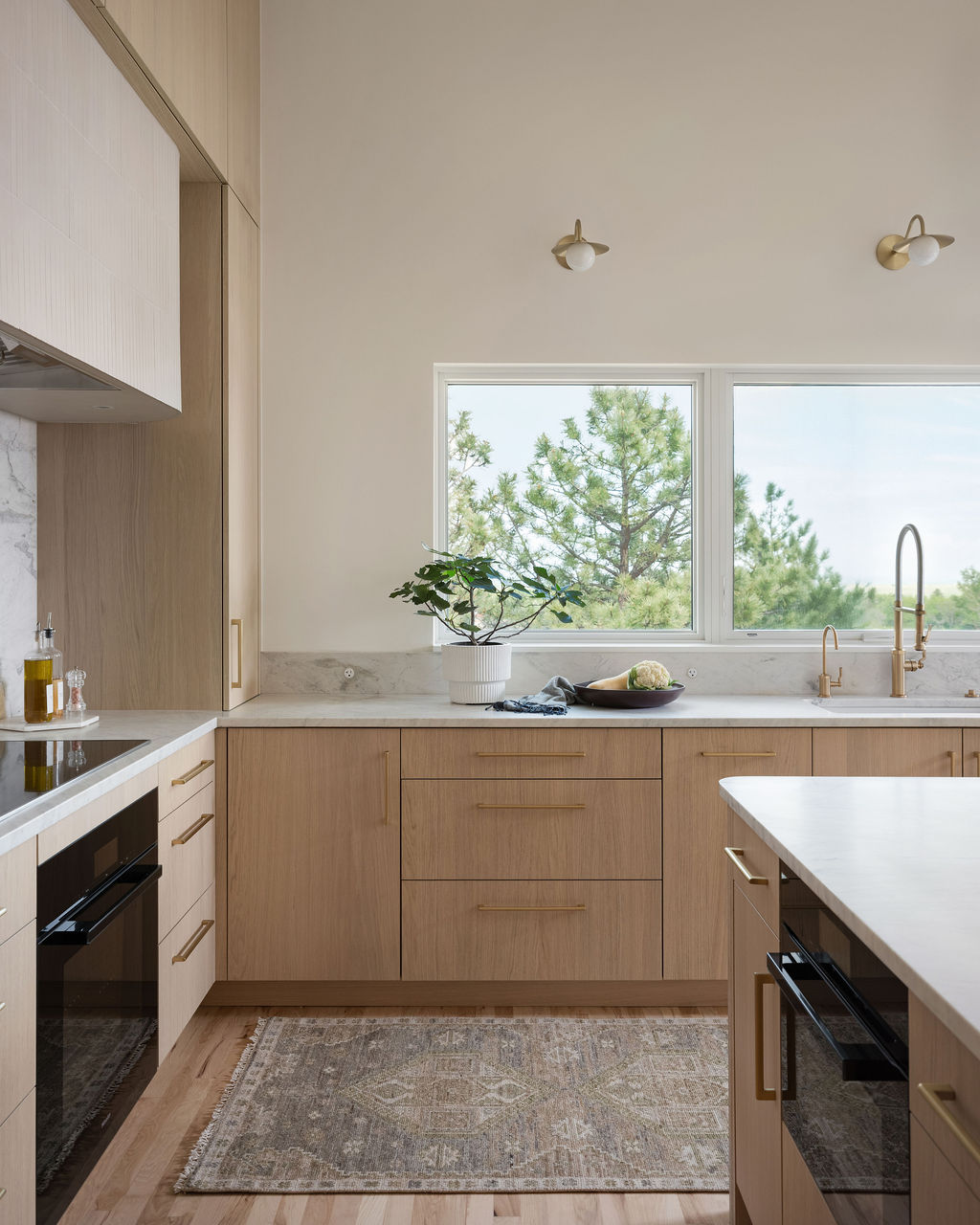
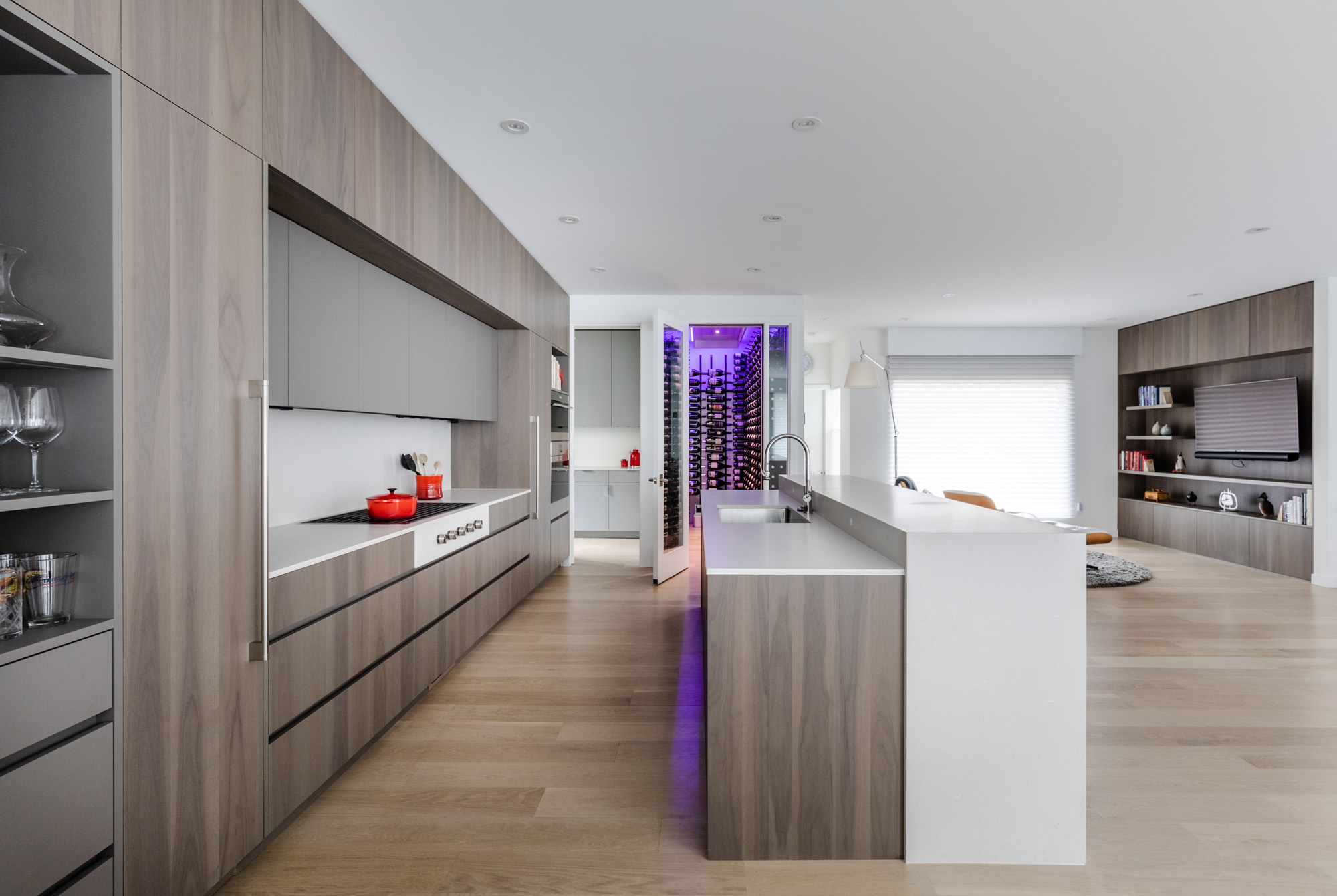
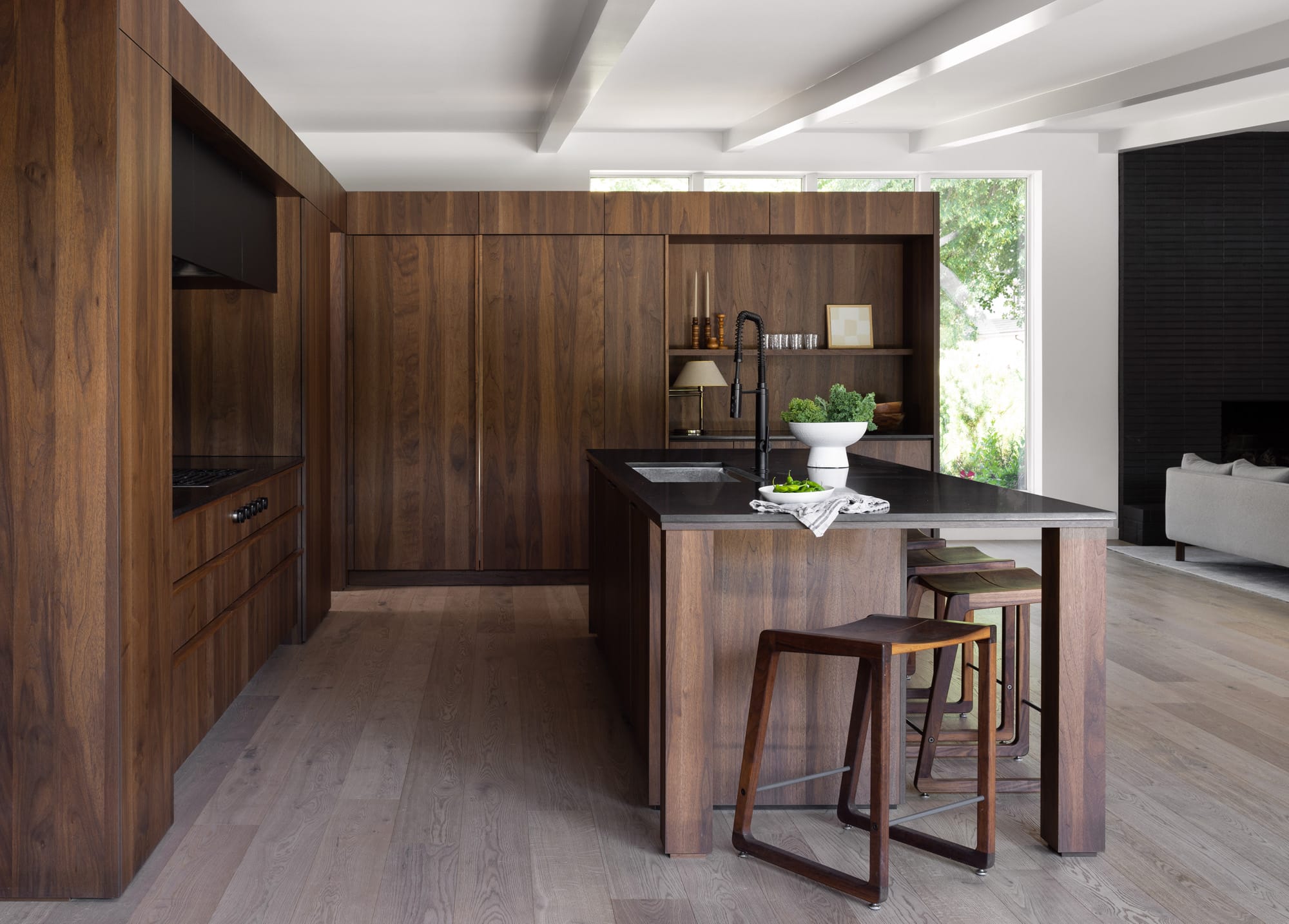
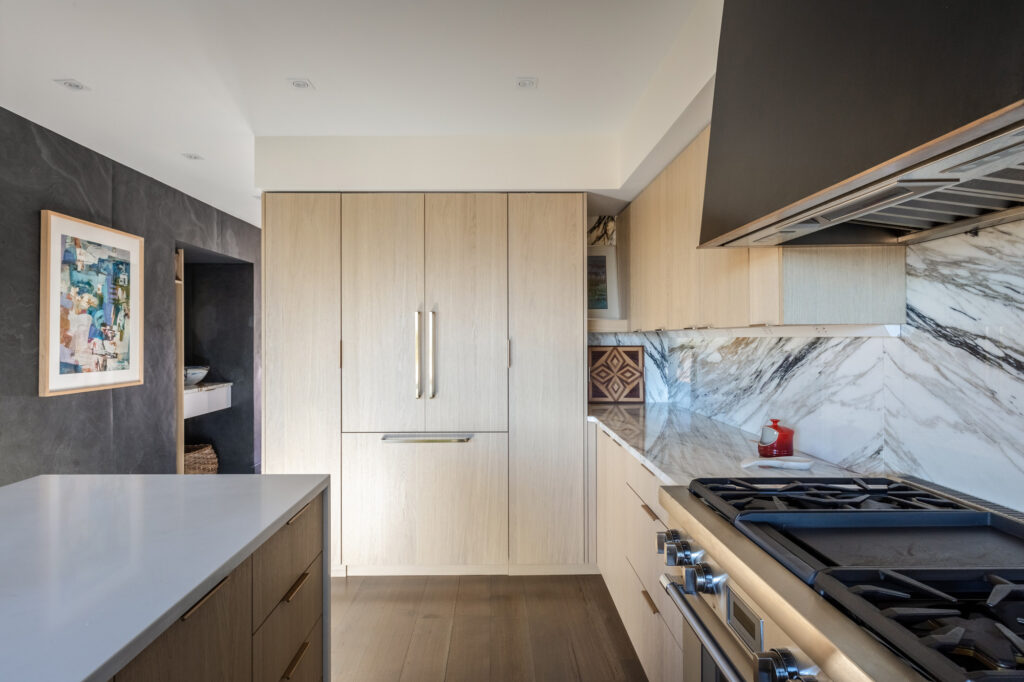
It is rarely one style or another. Several often share the same space, with each chosen for the part of the room it serves best: the pull that solves that challenge while keeping the cabinetry as easy to use as possible. Horse Ranch, for example, pairs edge straps on drawers with appliance handles on the tall appliance doors. Cedar Street 2 is typical of our shadow pull kitchens: appliance handles on the appliances, with shadow pulls wherever they fit.
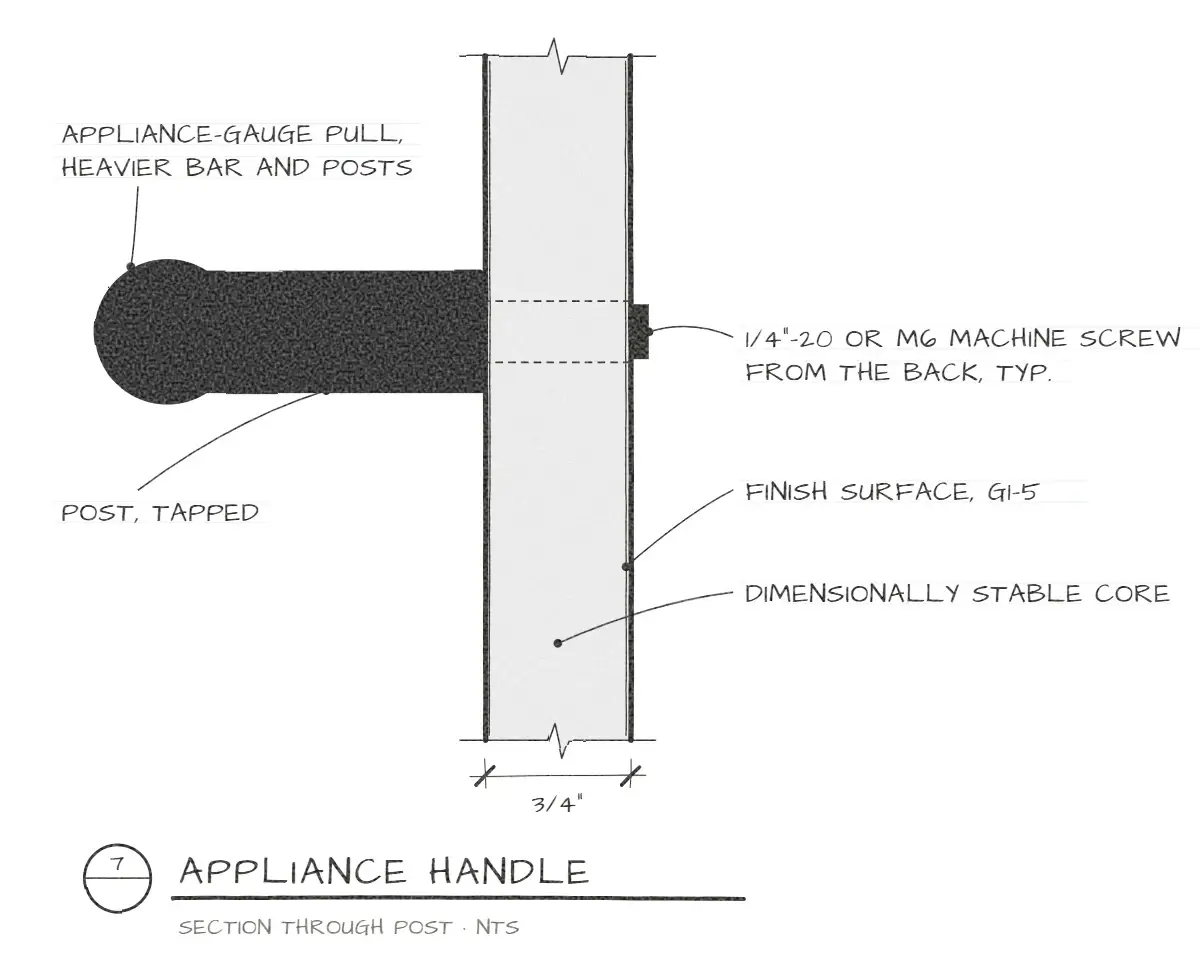
On appliance panels, it is highly recommended to use appliance gauge handles. They are built heavier, with larger threaded connections, to carry the weight of the door. We can’t recommend a standard handle on an appliance door.
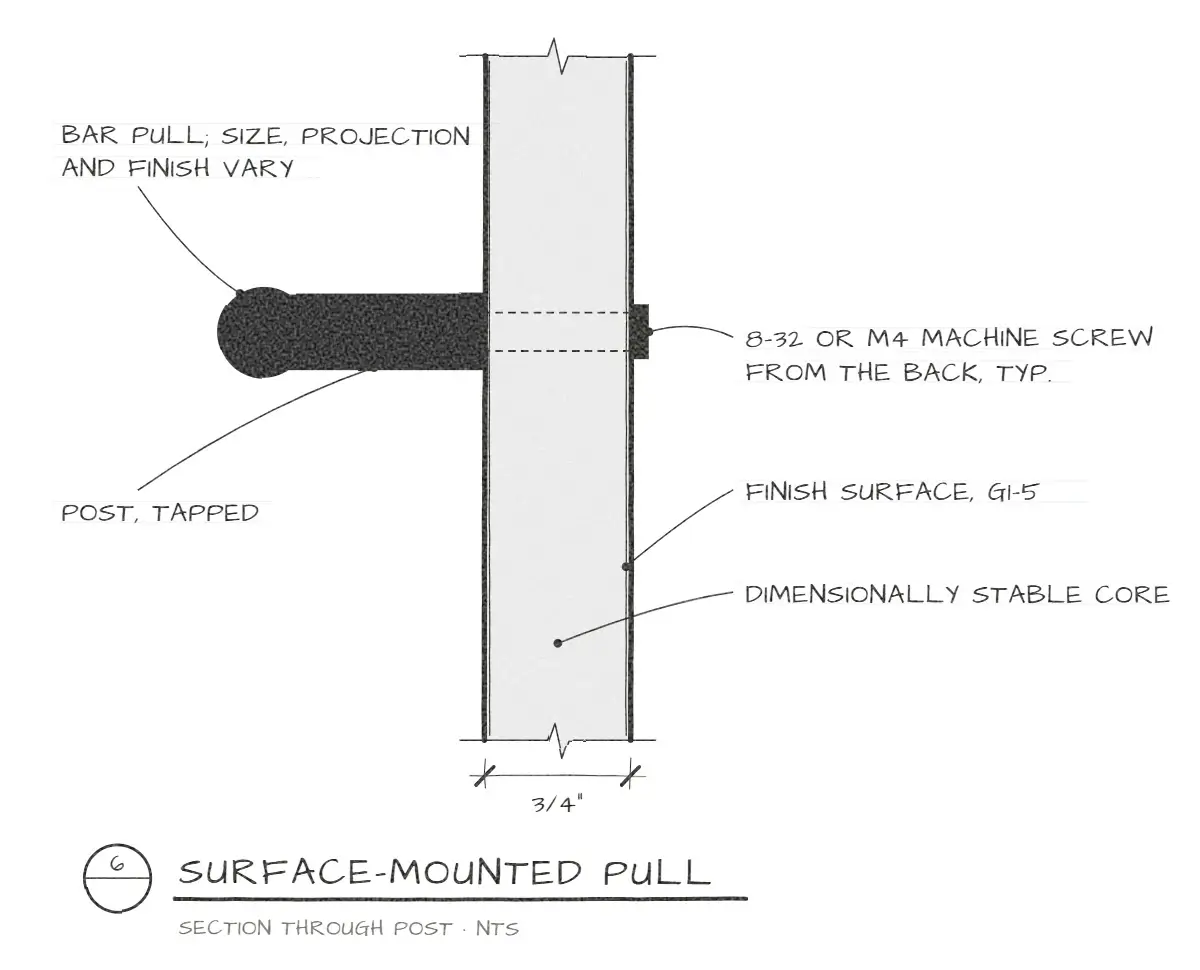
Surface-mounted pulls
Handles
A pull fastened to the face of the door or drawer, in a wide range of styles, lengths and finishes. Spans every budget, from simple and economical to bespoke.
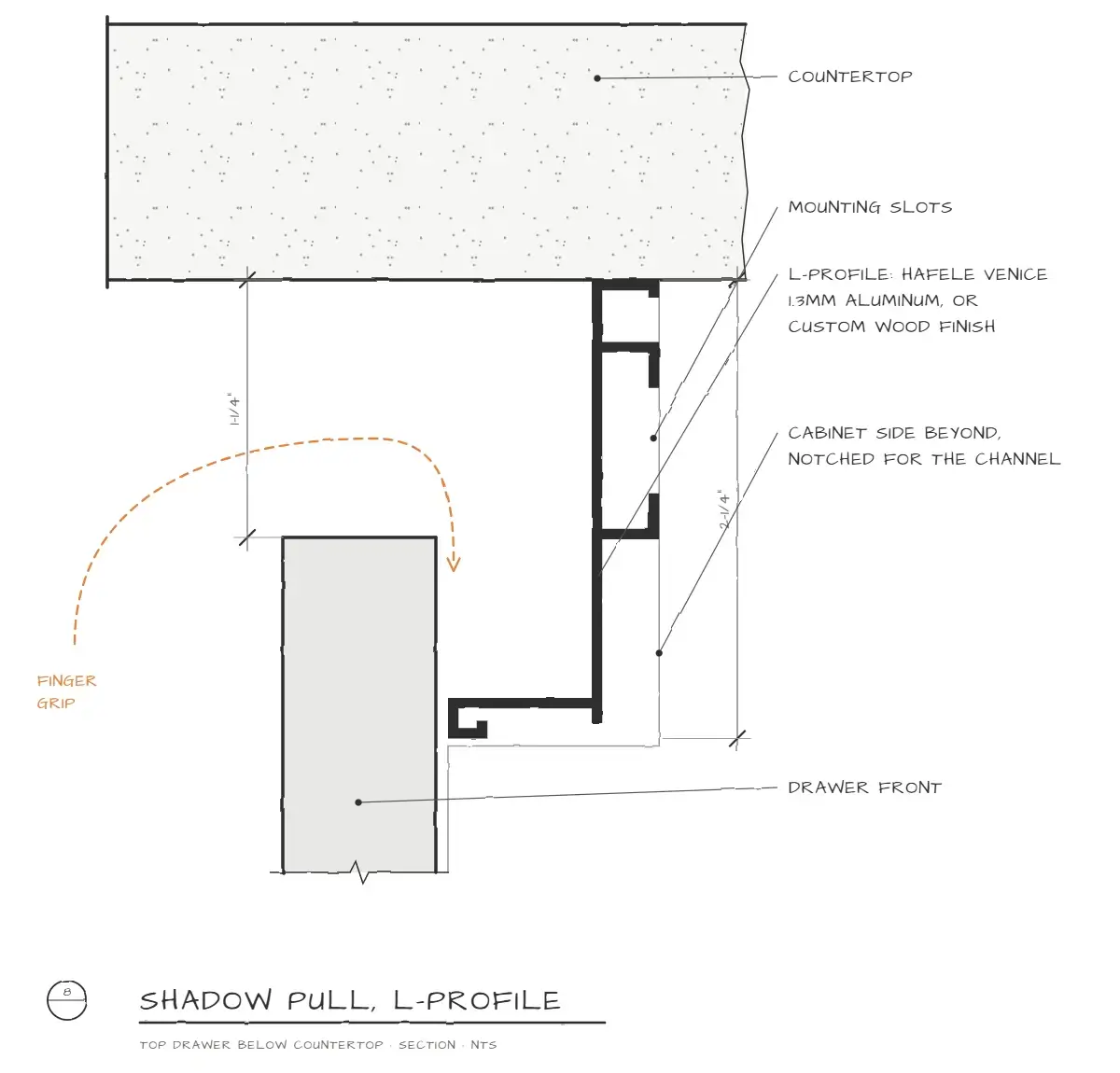
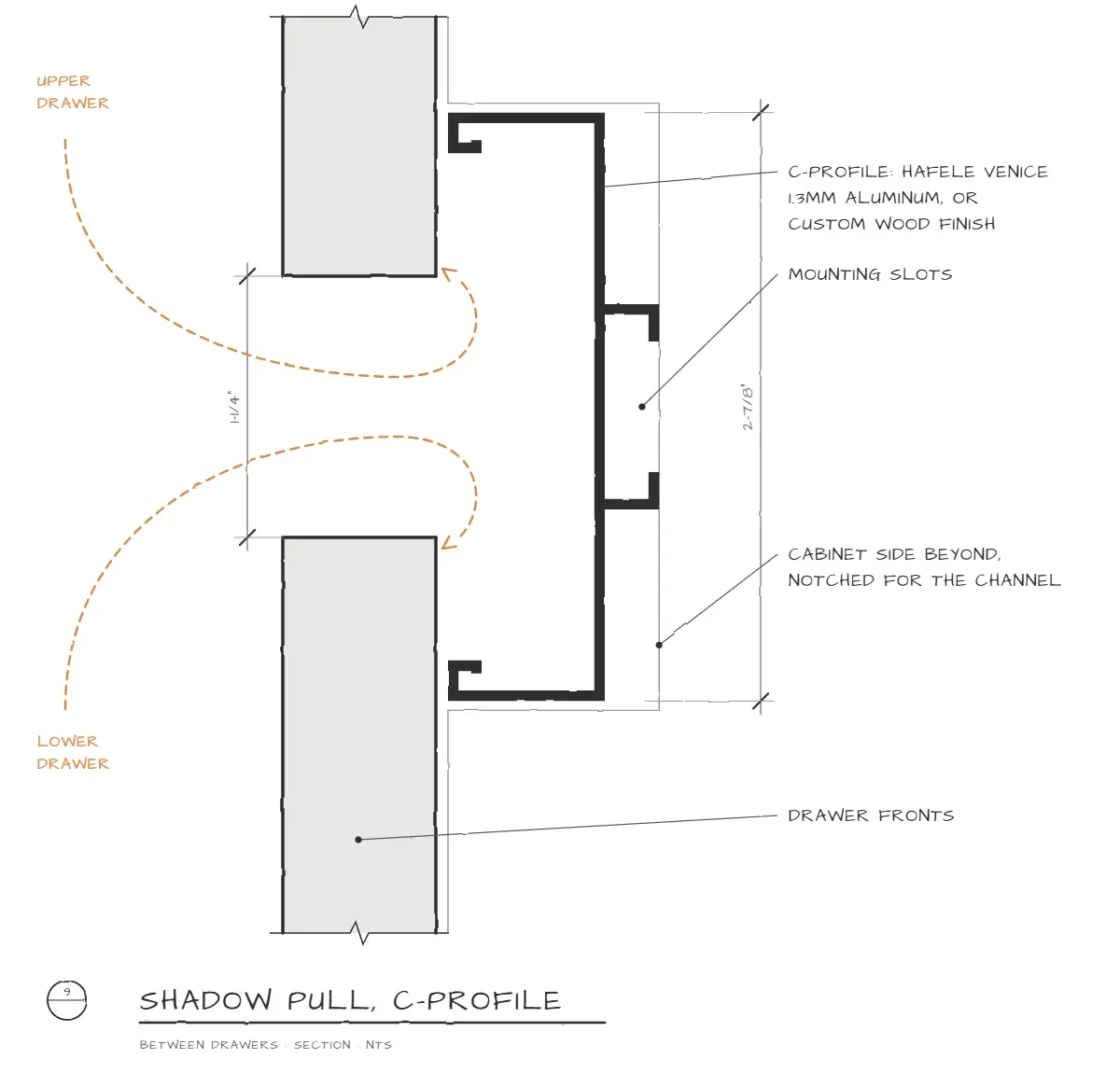
Shadow pulls
Recessed channel
A recessed aluminum channel built into the cabinetry, so doors and drawers open from a slim 1-1/4″ reveal. Black aluminum is standard; other profiles and custom-stained wood are options.
Strap handle pulls
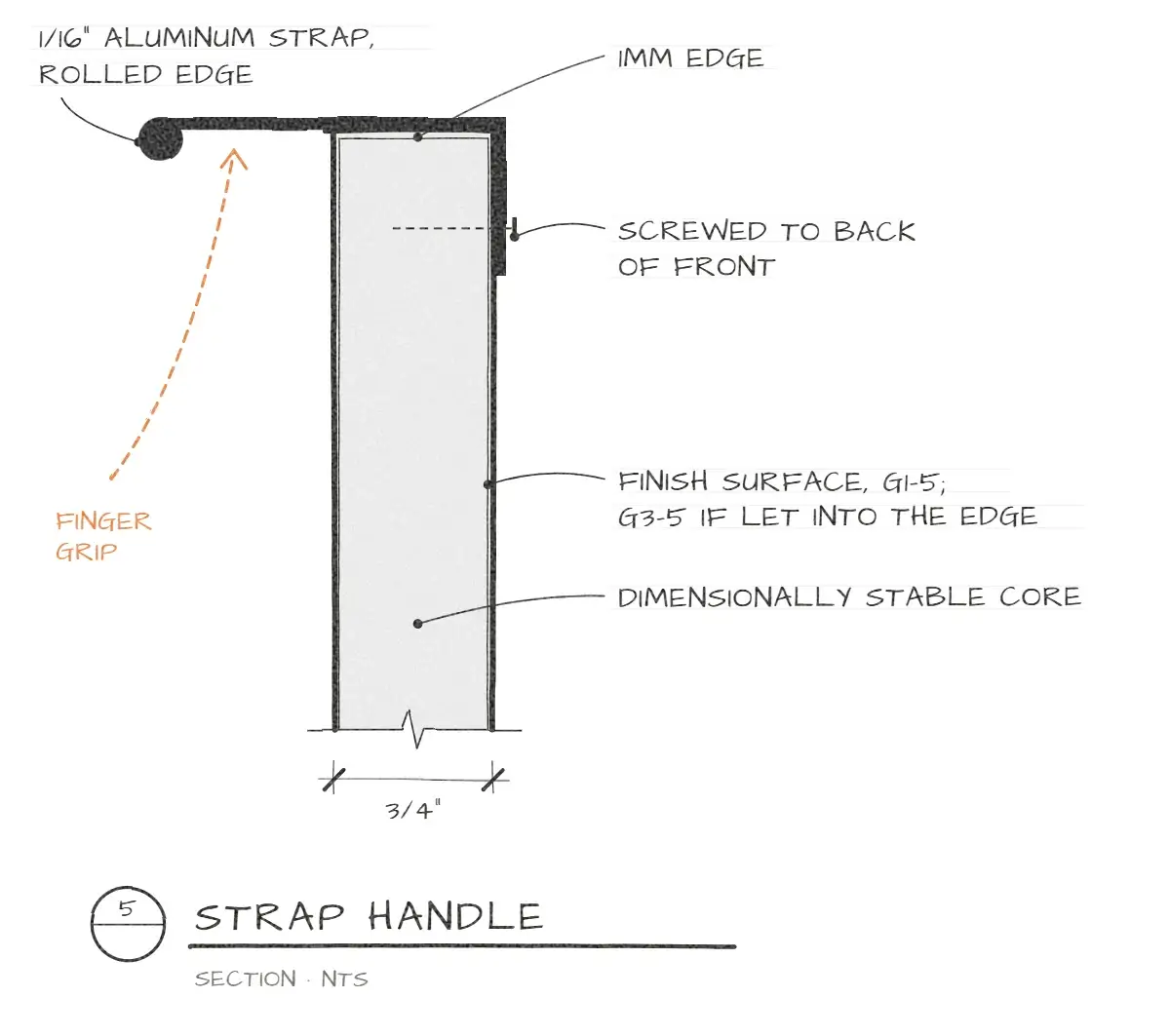
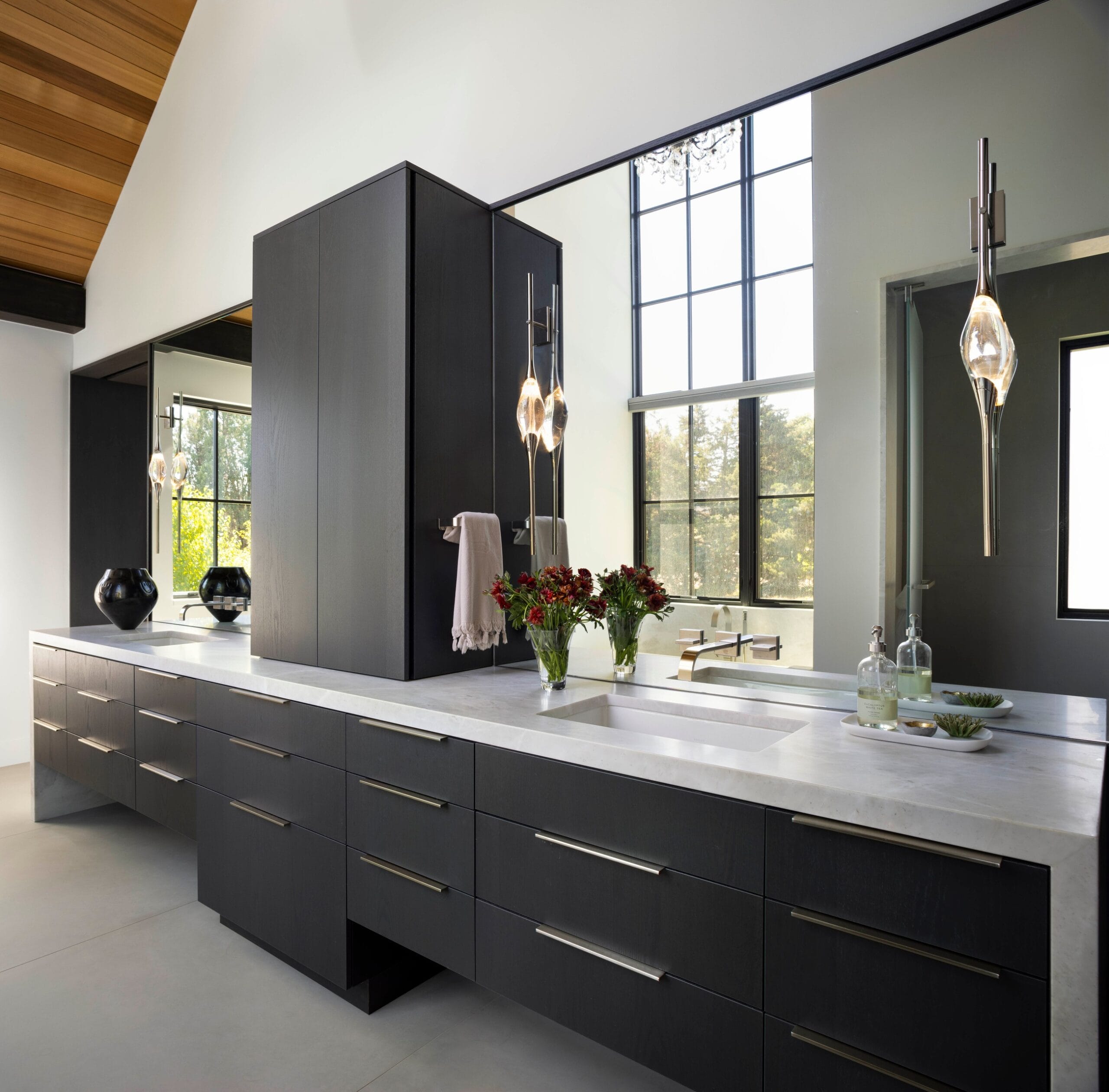
A flat strap that runs along the top edge of a drawer or door and gives a clean line across a run of fronts. Mostly metal, such as the brushed nickel shown here, with a few exceptions.
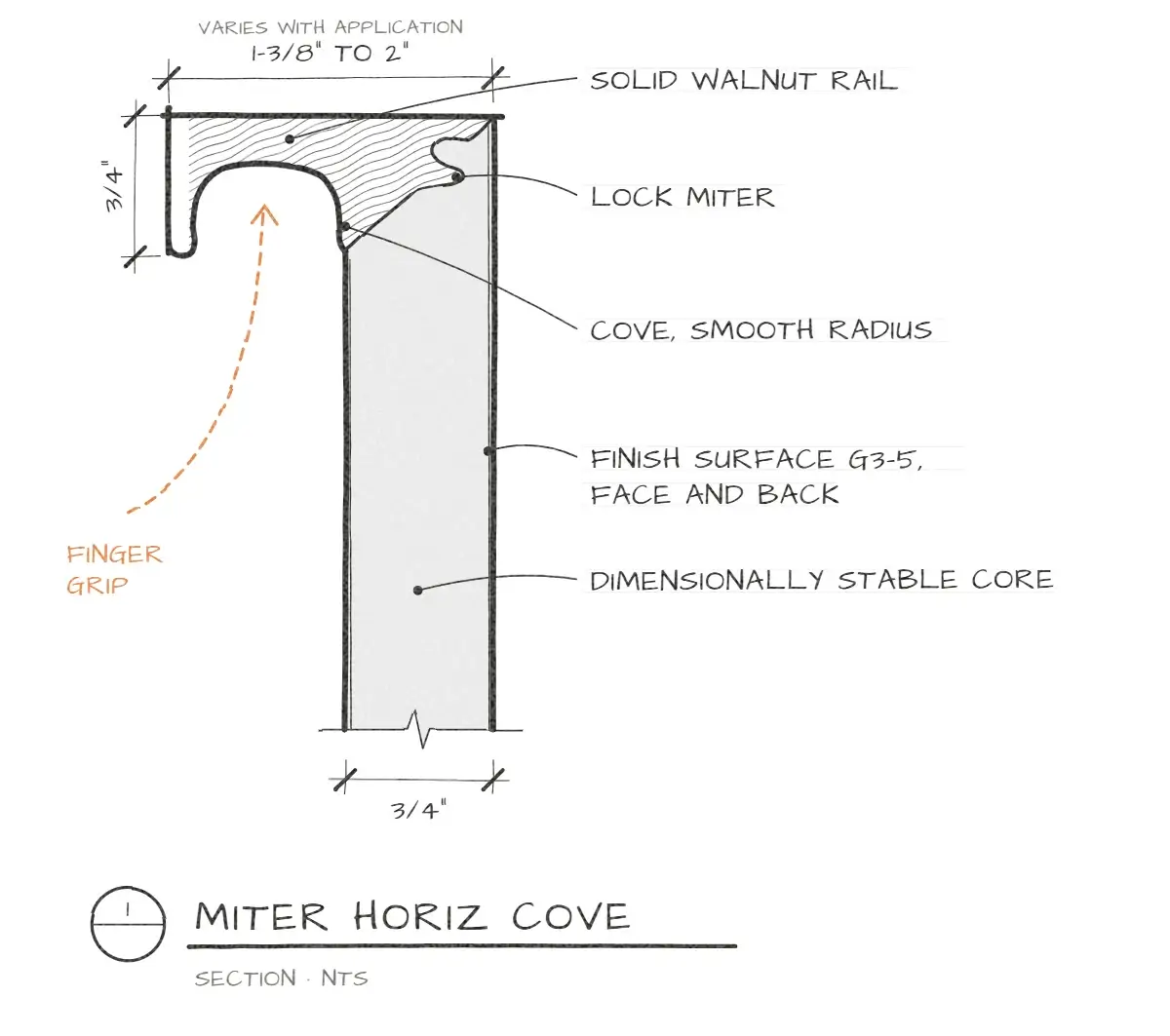
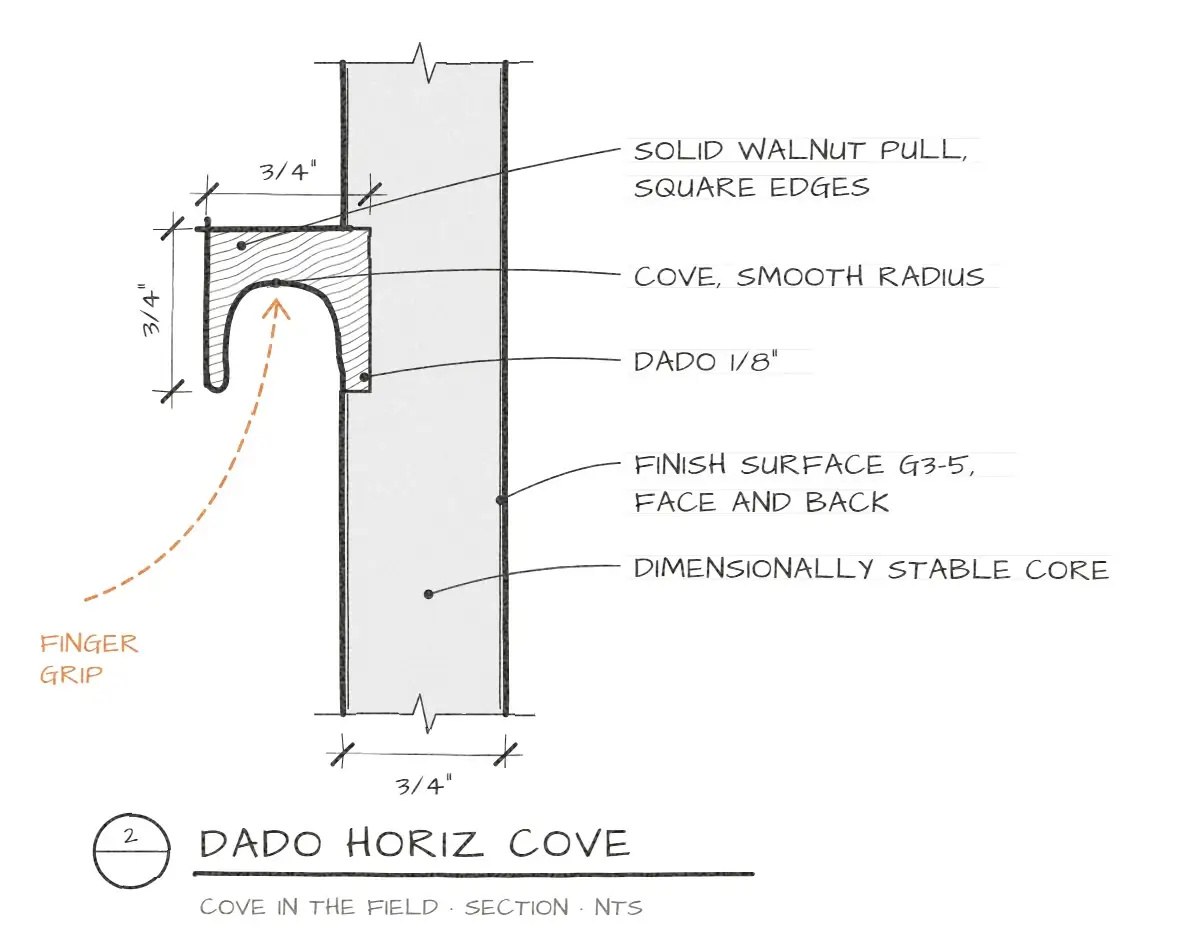
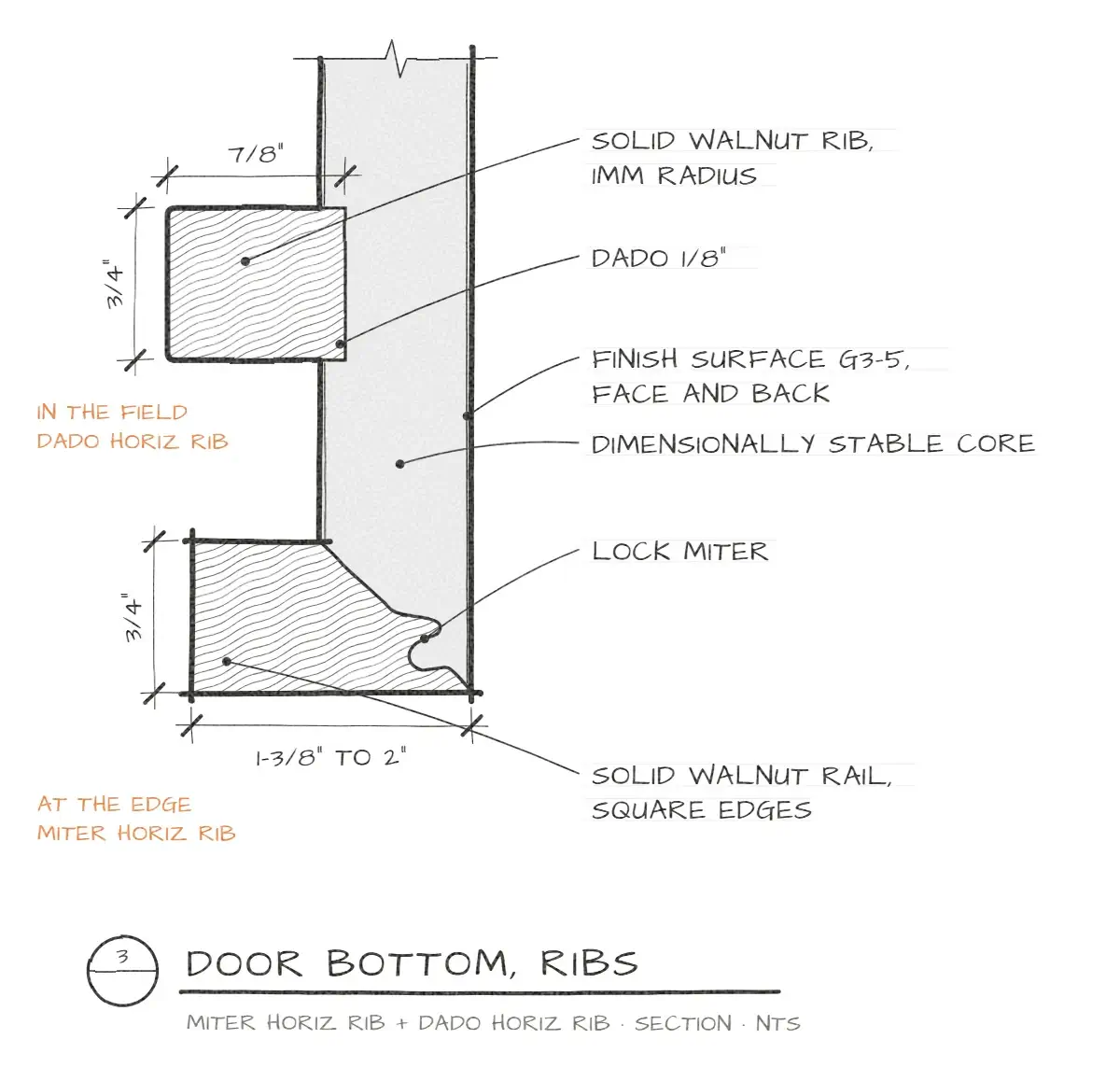
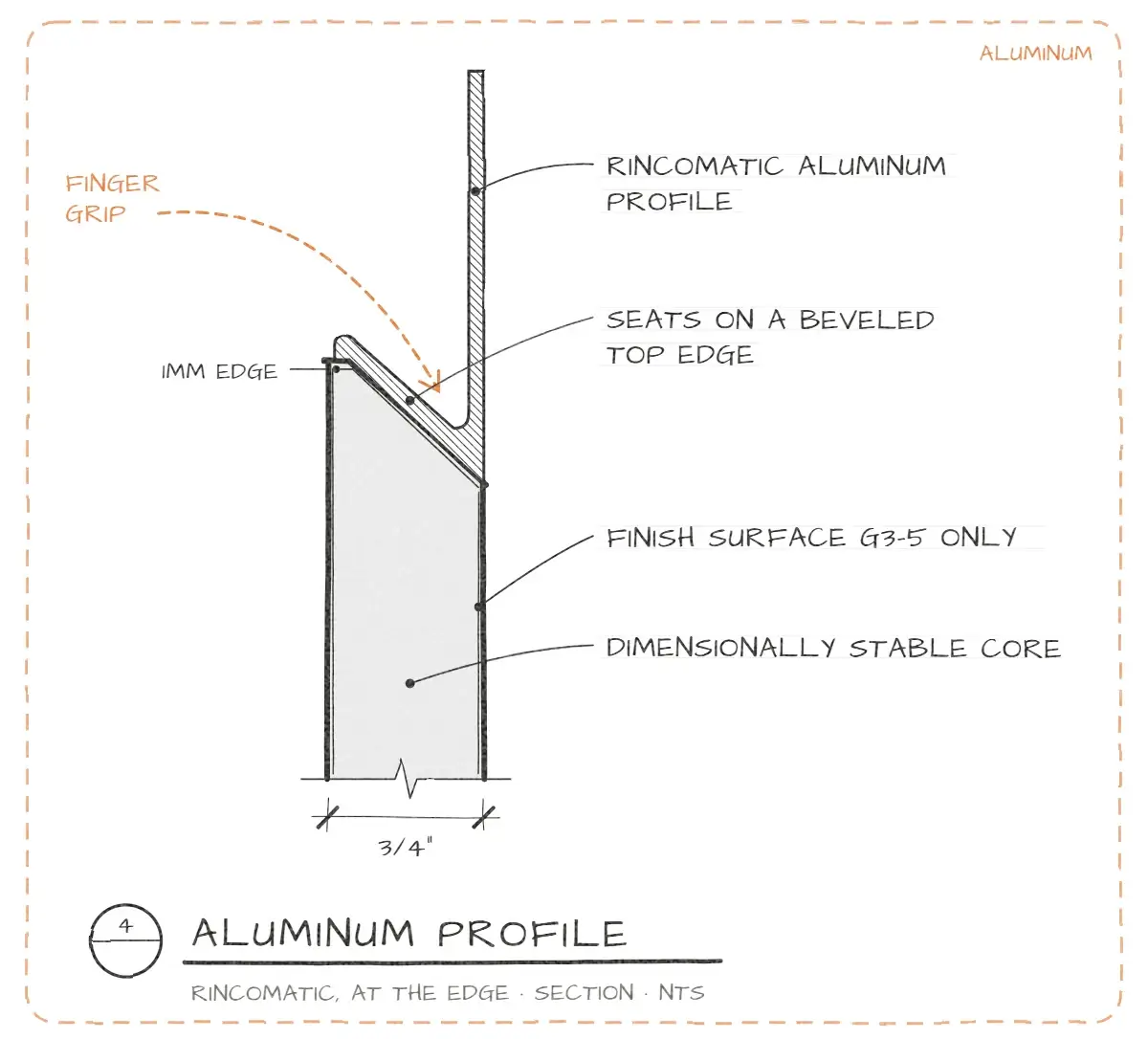
Side versions (Miter Side Pull, Dado Side Rib and so on) use the same profiles, run vertically.
Custom integrated pulls
Cove, slat or aluminum profile
A grip built into the edge of the door or drawer rather than added to its face.
A cove pull shapes a finger lip into the edge; a slat pull is a clean edge with no lip; both are made from the same material as the front. An aluminum profile gives the same line in metal.

Touch to open
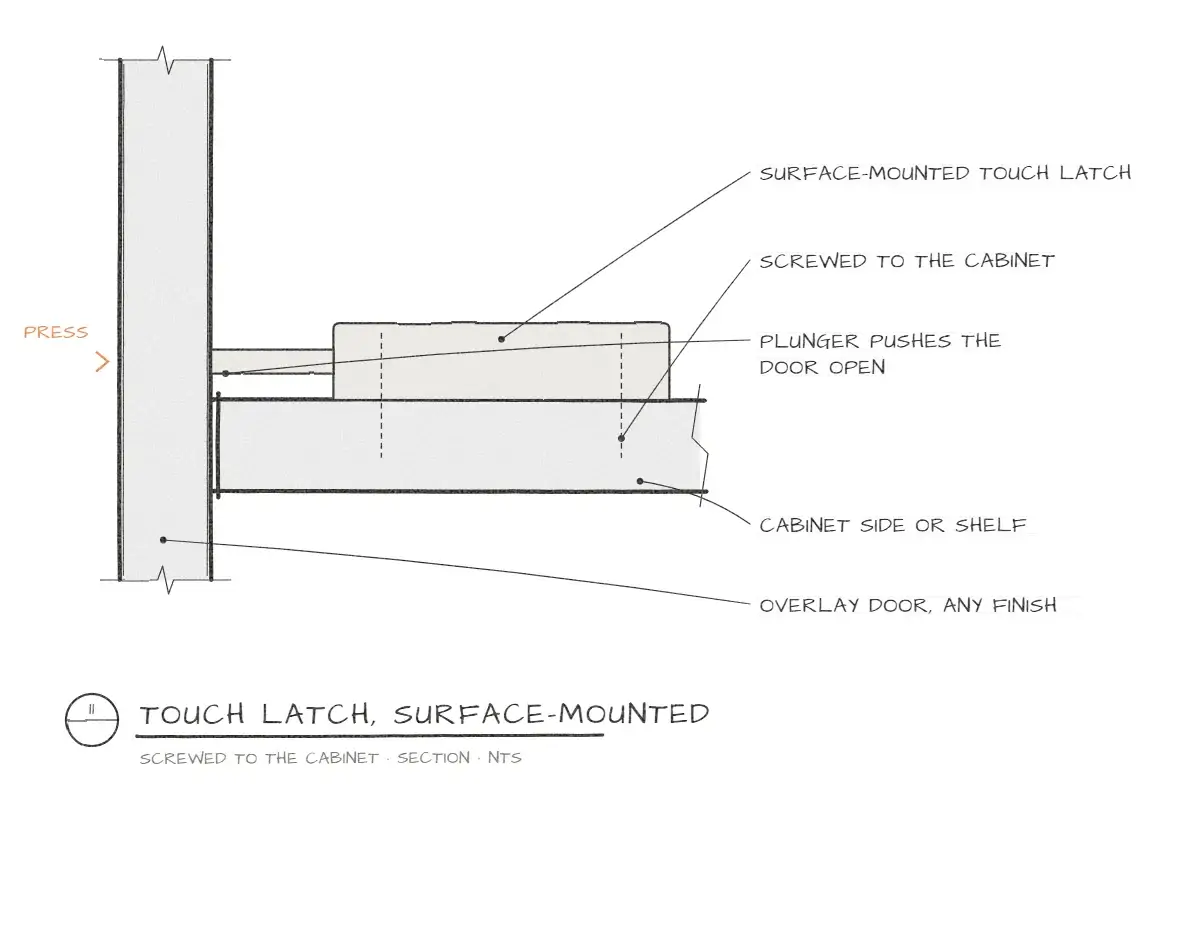
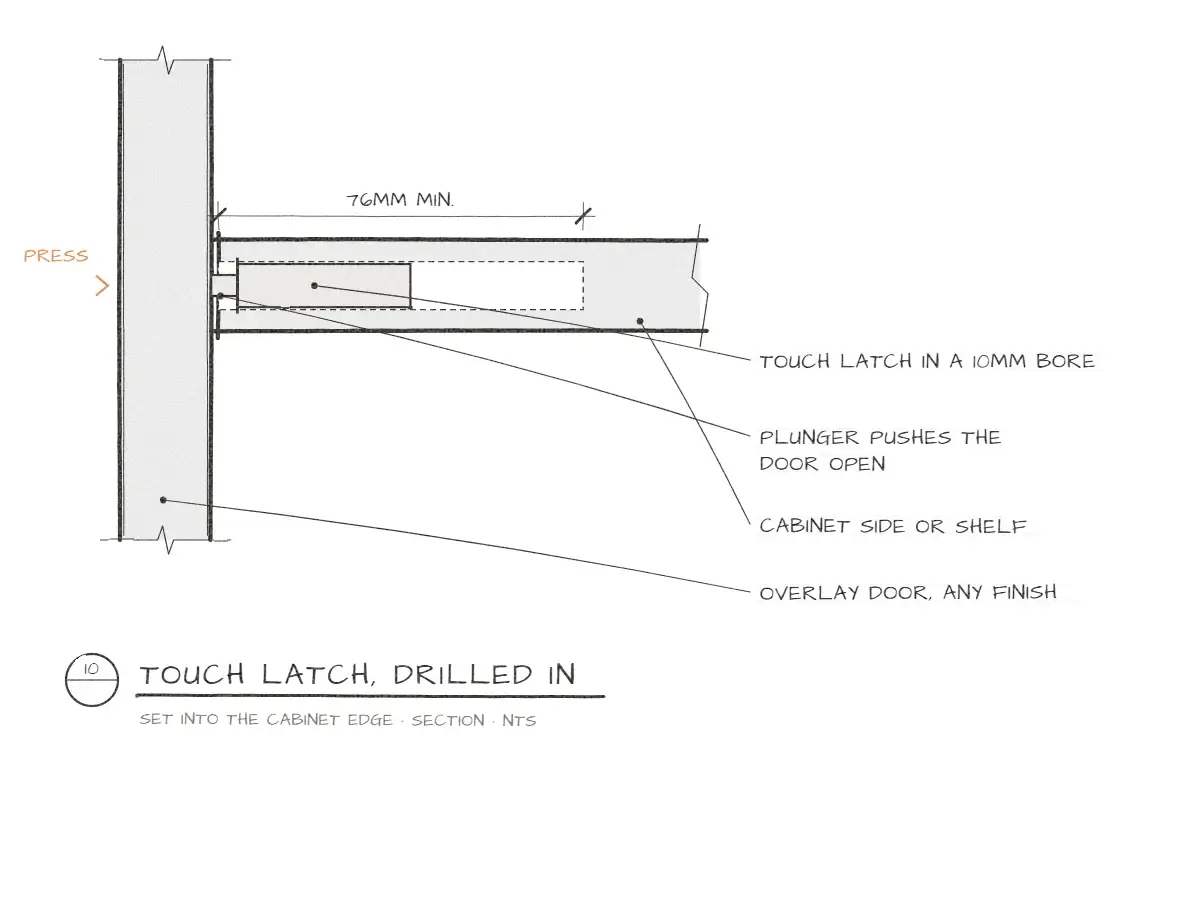
Touch latch (TL)
A push latch opens the door when you press the front, leaving a clean, handle-free look. Often a good fit for tall upper cabinets, where a handle would sit too high.
Appliance handles
Appliance pulls
A heavier pull with larger threaded connections, made to carry the weight of an appliance door. Often paired with shadow pulls.
| Surface-mounted | Shadow pulls | Strap handle | Custom integrated | Touch to open | Appliance handles | |
|---|---|---|---|---|---|---|
| Relative cost | From economical to bespoke; a custom handle can cost more than a shadow pull | Priced by the linear foot; similar to custom integrated | Most economical | Priced by the linear foot; similar to shadow pulls | Affordable | Usually more than a standard handle, given the heavier build |
| How it looks | Hardware you see and touch; sets much of the style | A clean front with a slim shadow line at each opening | A slim metal line along the top of each front | The pull reads as part of the front: in wood for cove and slat pulls, a slim metal line for aluminum profiles | A clean, handle-free front; because you press the front itself, fingerprints show more | A longer, heavier pull sized to the appliance door |
| Doors and drawers | Works on almost any design, as long as inside corners allow for how far the pull stands off the front | Continuous channels are set into notched cabinet boxes during install, so the boxes are prepped for them in advance | Stands off the front like a surface-mounted pull, so inside corners allow for it | A cove pull’s grip stands off the face of the door; Rincomatic profiles clip onto the edge with no routing | Best on doors, within limits on door size. Suits small drawers; wide, heavy drawers do not open as well, so we rarely recommend it there | For appliance panels only, not standard doors and drawers |
| Hinges | No real effect; at inside corners, a wider filler may be needed so the handle clears the neighboring door | Little effect | Can be a challenge where several doors meet; some straps are let into the door edge so they don’t drag | Cove pulls need hinges made for thicker doors and can bind if not detailed carefully | Little effect | Set by the appliance |
| Dishwasher and appliance panels | Use appliance handles, a heavier pull with larger threaded connections; we can’t recommend a standard handle on an appliance door | Often not possible on a dishwasher, because of the added door weight and the depth of recess the channel needs; usually paired with appliance handles | Not recommended; like a surface-mounted handle, a strap isn’t built for the weight of an appliance door, so use appliance handles there | Often not recommended on heavy appliance doors; the small cove is hard on the fingers, so appliance handles are used there | Cannot be used on appliances | The right choice; we can’t recommend a standard handle on an appliance door |
| When to decide | With the design | Early: the cabinet boxes are notched for the channel before they are built | With the design | Early: cove pulls change door thickness and hinges | Can be settled later than the other options, though early is best | With the appliance selection |
Plan ahead
Designed in, early
Every option needs to be designed in at some point, and it is often sooner than later. Shadow pulls and custom integrated pulls in particular change how the cabinetry is built, so deciding early keeps detailing and pricing steady. Doors that push to open use touch latches, marked TL on our drawings.
Material and detail together shape a budget: see the Pricing Matrix on Materials.