

Lighting
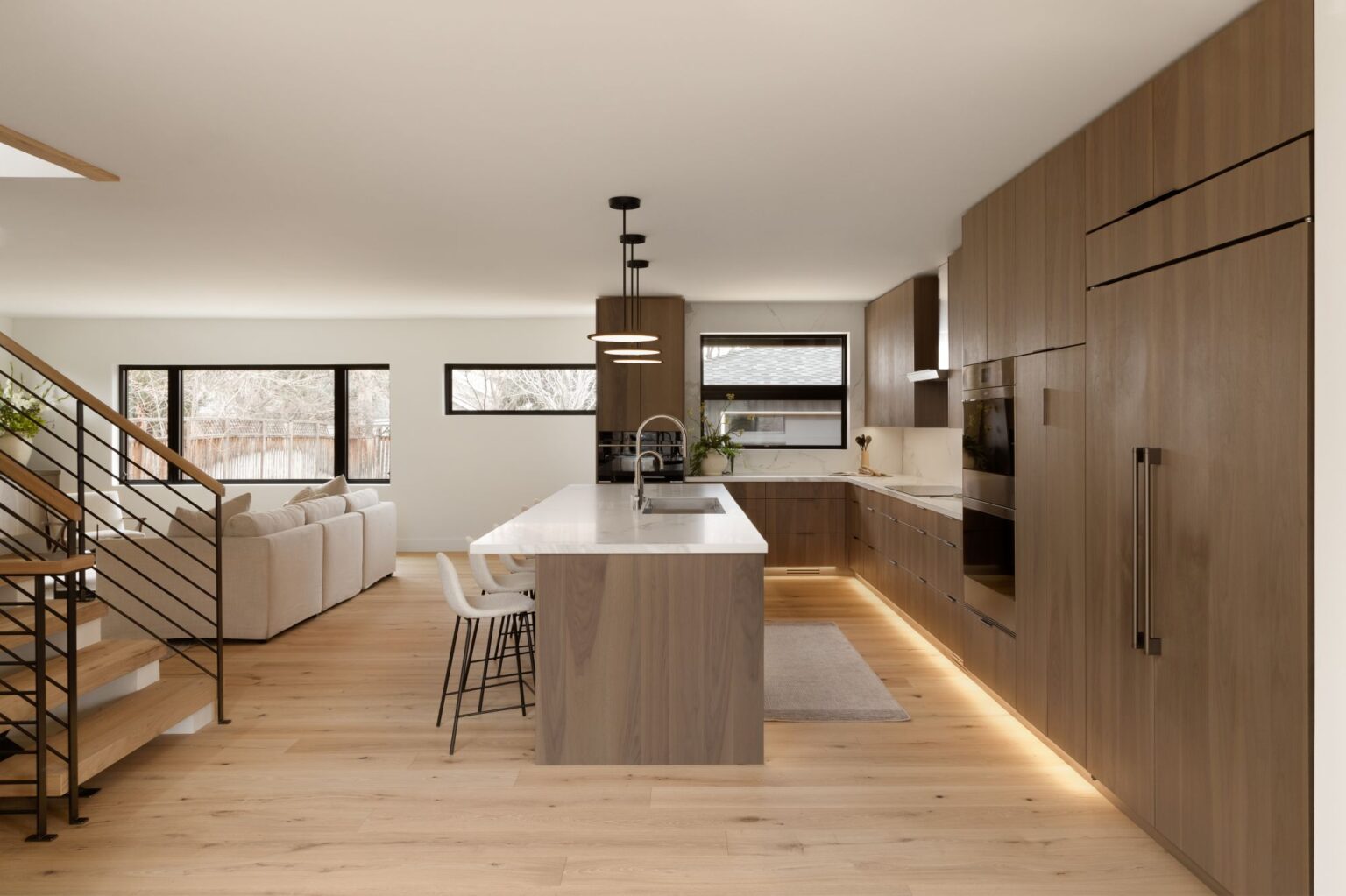
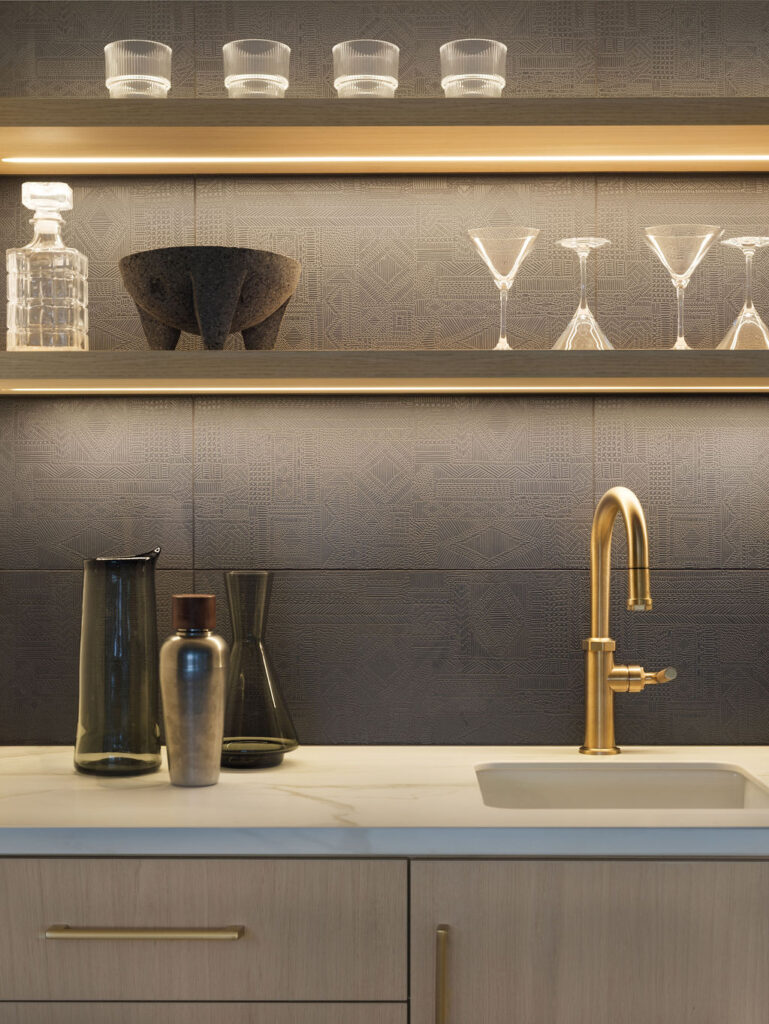
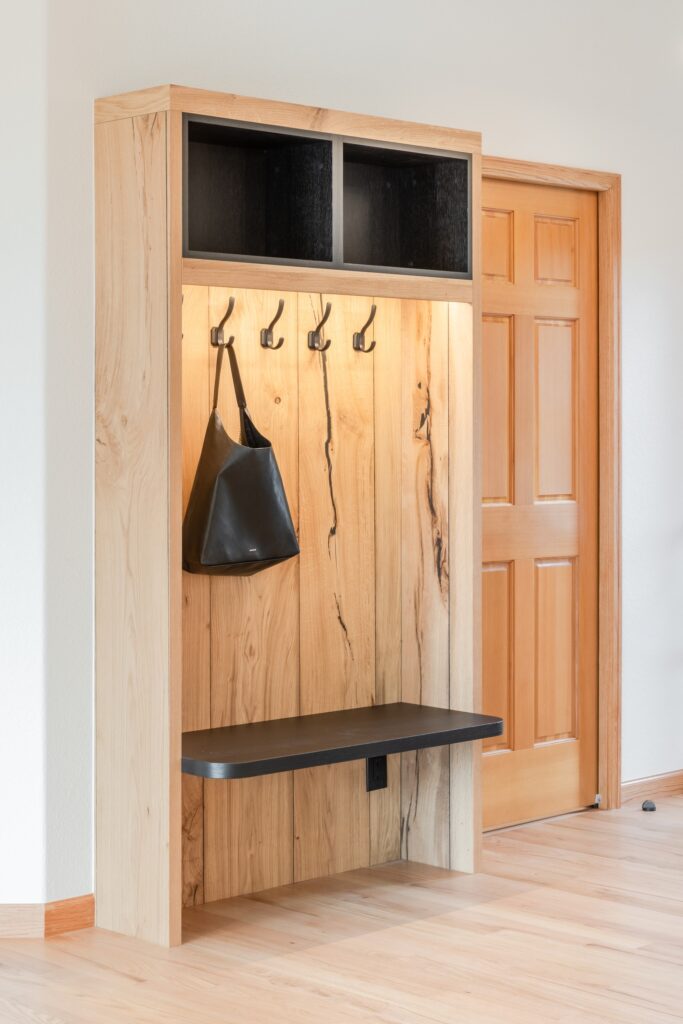
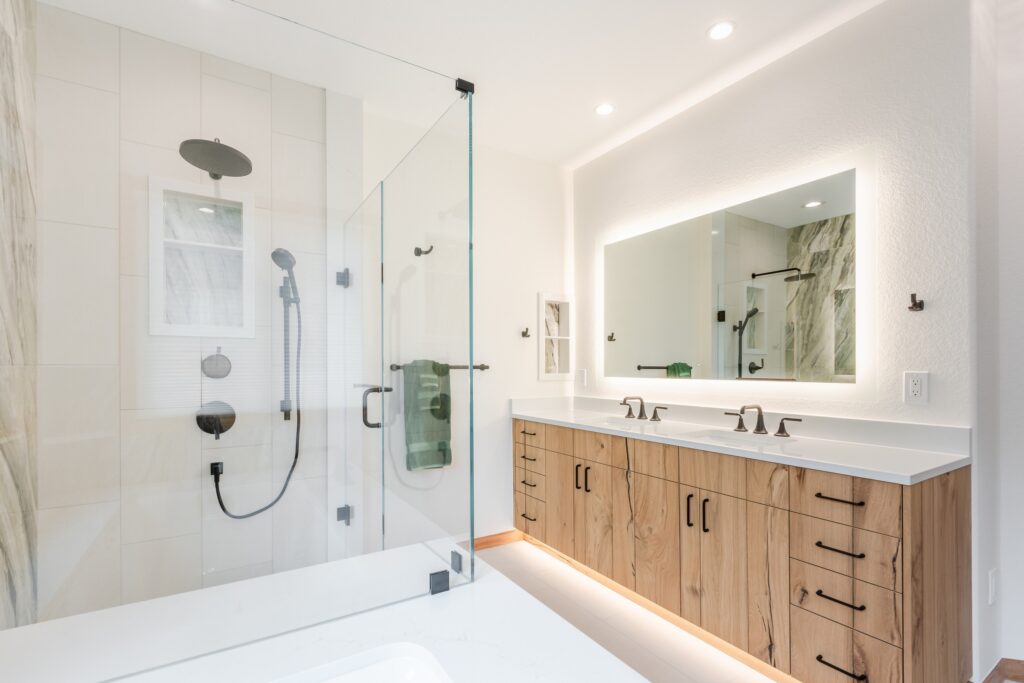
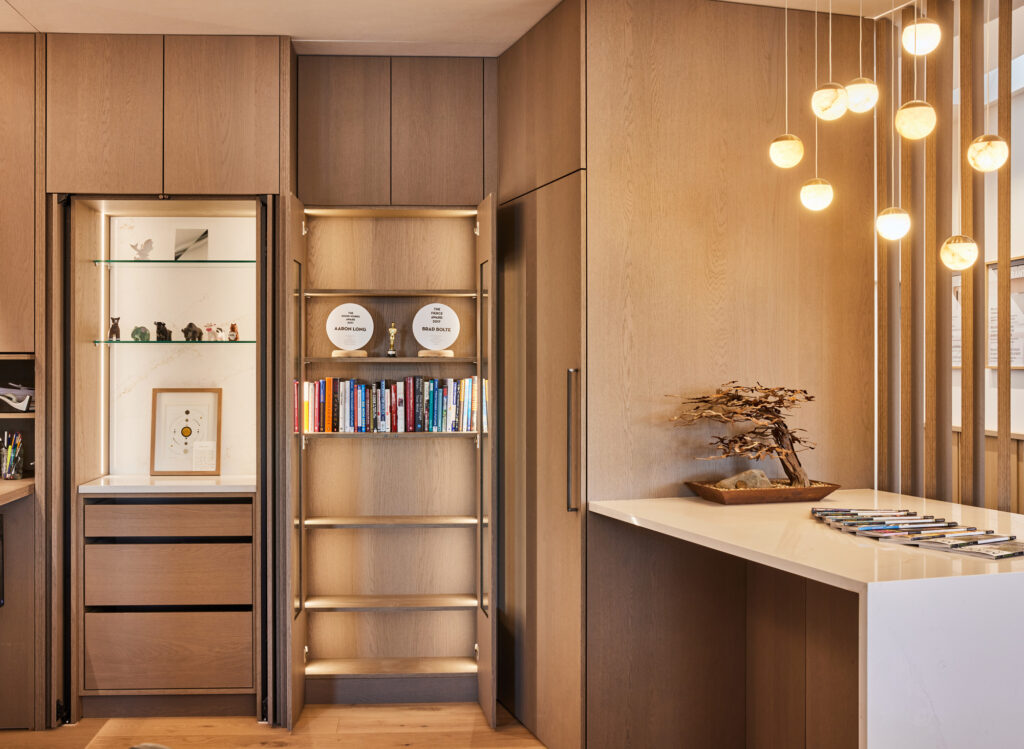
Lighting built into your cabinetry, inside cabinets and drawers, under shelves, at the toe kick and above the uppers, puts light exactly where you use it.
Who does what
How lighting is handled
This page is a guide to lighting in cabinetry. Vonmod builds the cabinetry to receive the light; your electrician supplies and installs the lighting itself.
Vonmod
Prepares the cabinetry for lighting: routed channels, access points and finished panels.
Can provide the aluminum channel and lenses through our vendors, or work with the extrusion your architect or lighting designer specifies.
Marks each low-voltage whip location on our shop drawings.
Coordinates with your design and electrical teams during detailing and installation, so the light lands where it is meant to.
Your electrician
Provides the fixtures, drivers, controls, wiring and electrical labor, unless your proposal notes otherwise.
Provides a low-voltage whip at each location marked on our drawings, with about two feet or more of wire to lace into the cabinetry.
Because licensed electricians install and service lighting, lighting components are not covered by the Vonmod warranty.
Example drawing
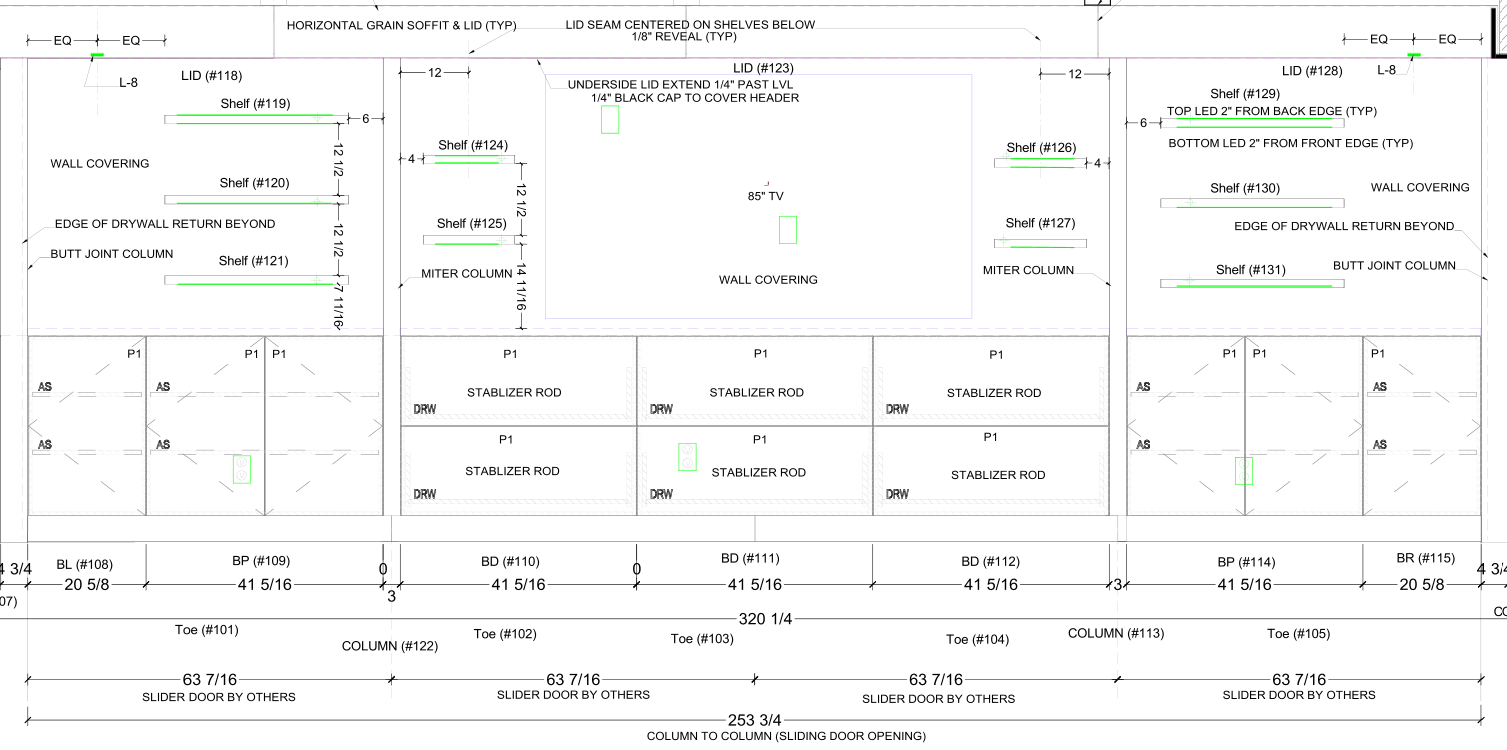
Locations on our drawings
An example elevation from our shop drawings. Lighting and electrical locations are marked in green, so your electrician knows where to bring low-voltage whips and power.
Love the spaces you live and work in
Light through the day
Light built into cabinetry changes how a room feels, not only how well you see in it. The same kitchen, bath or bar reads differently from first light to late evening.
A soft wash under the uppers and at the toe kick lets you move through the kitchen before the house is fully awake.
Task light on the counter and inside cabinets fills in where daylight does not reach.
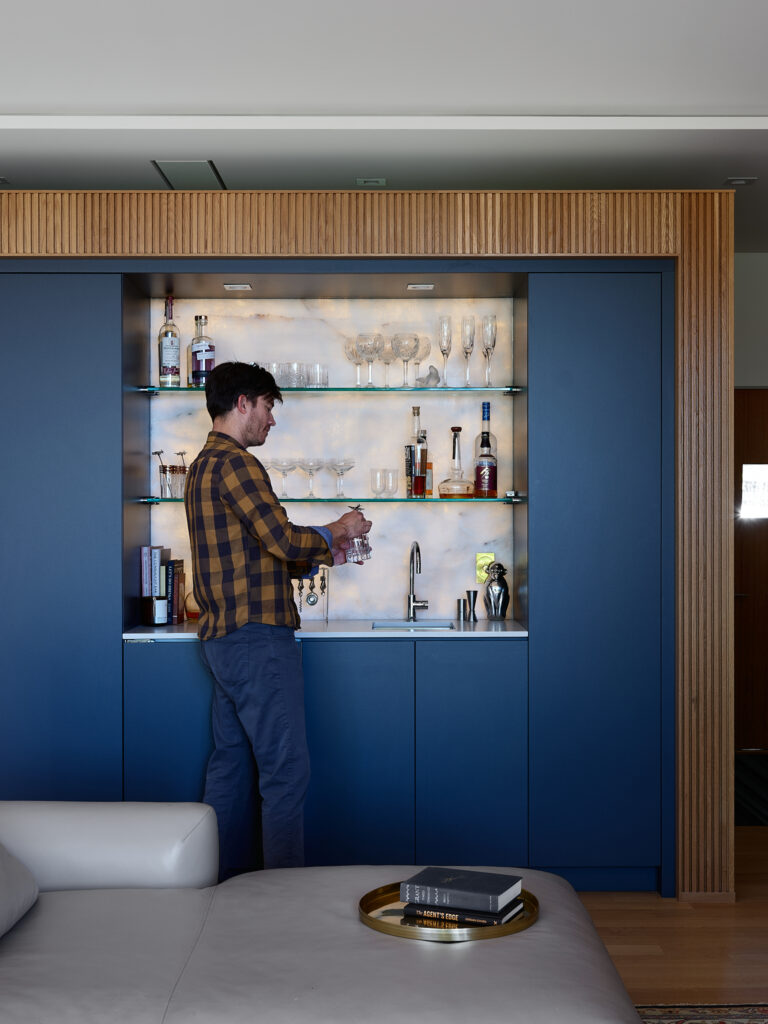
With the overheads off, lit shelves, niches and a glowing toe kick give the room a quieter, warmer mood.
Two ways to light cabinetry
Linear and puck
Linear lighting
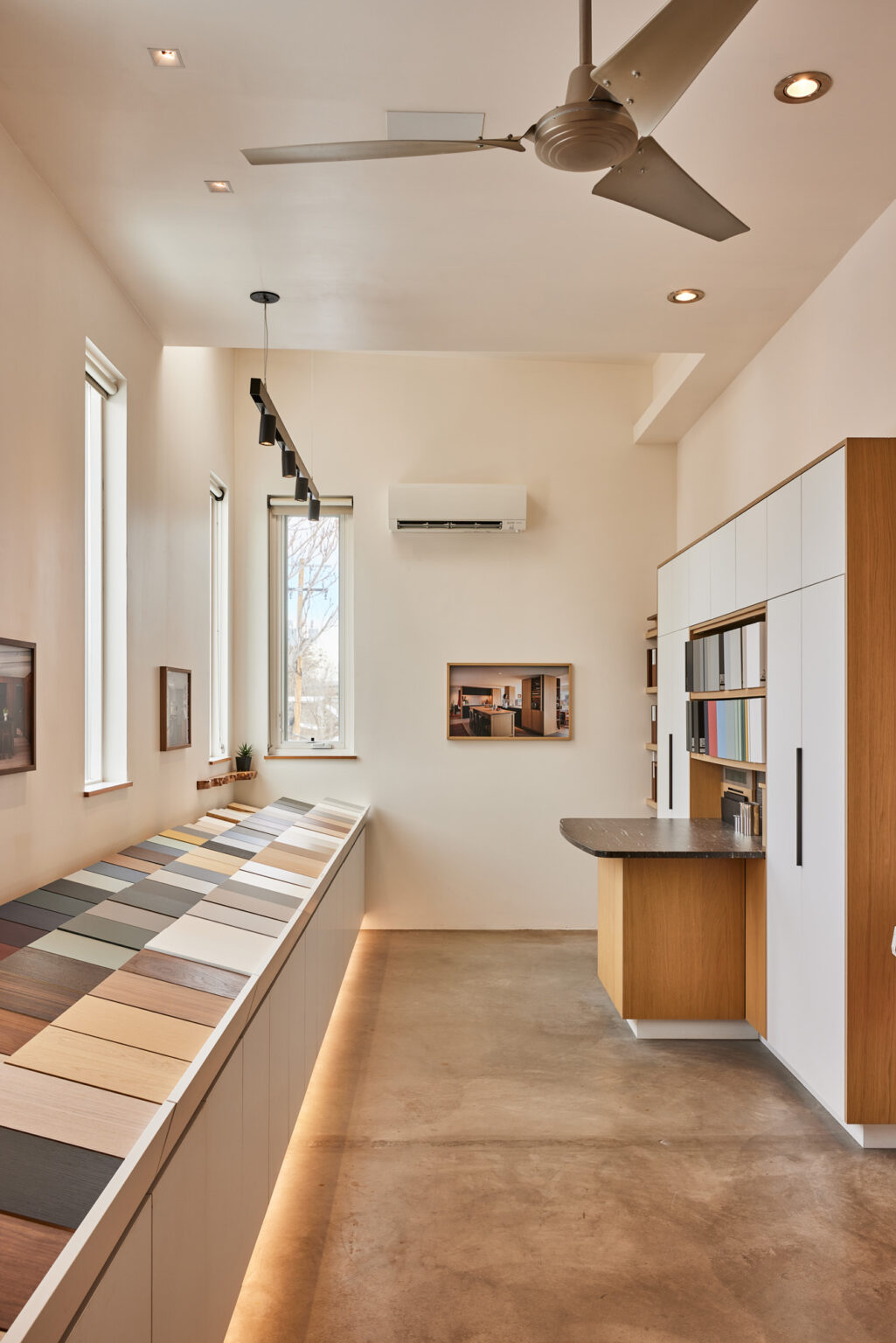
A continuous line of light set in a recessed aluminum profile, with a choice of covers. Used for task lighting, along shelves and at the toe kick.
Shown: the toe kick in our material gallery.

Puck lighting
A small round light recessed into the cabinet or millwork. Used for up and down light on shelves, under cabinets and in soffits.
Shown: pucks in the curved soffit of our studio.
Color of light
Warm, neutral and tunable
The color of light is measured in kelvin (K). Lower numbers read warm and amber, higher numbers read crisp and white. Most homes sit between 2700K and 3000K, with cooler light kept for task areas.
One color temperature, chosen for the room. Simple and consistent.
Light grows warmer as it dims, the way a filament bulb does, so a late evening feels softer.
Color can be adjusted through the day, cooler in the morning and warmer at night, to follow a natural daily rhythm.
Warm dim and tunable systems depend on the fixtures, drivers and controls, so they are chosen with your design and electrical teams.
Where light can go
Typical locations
In our projects
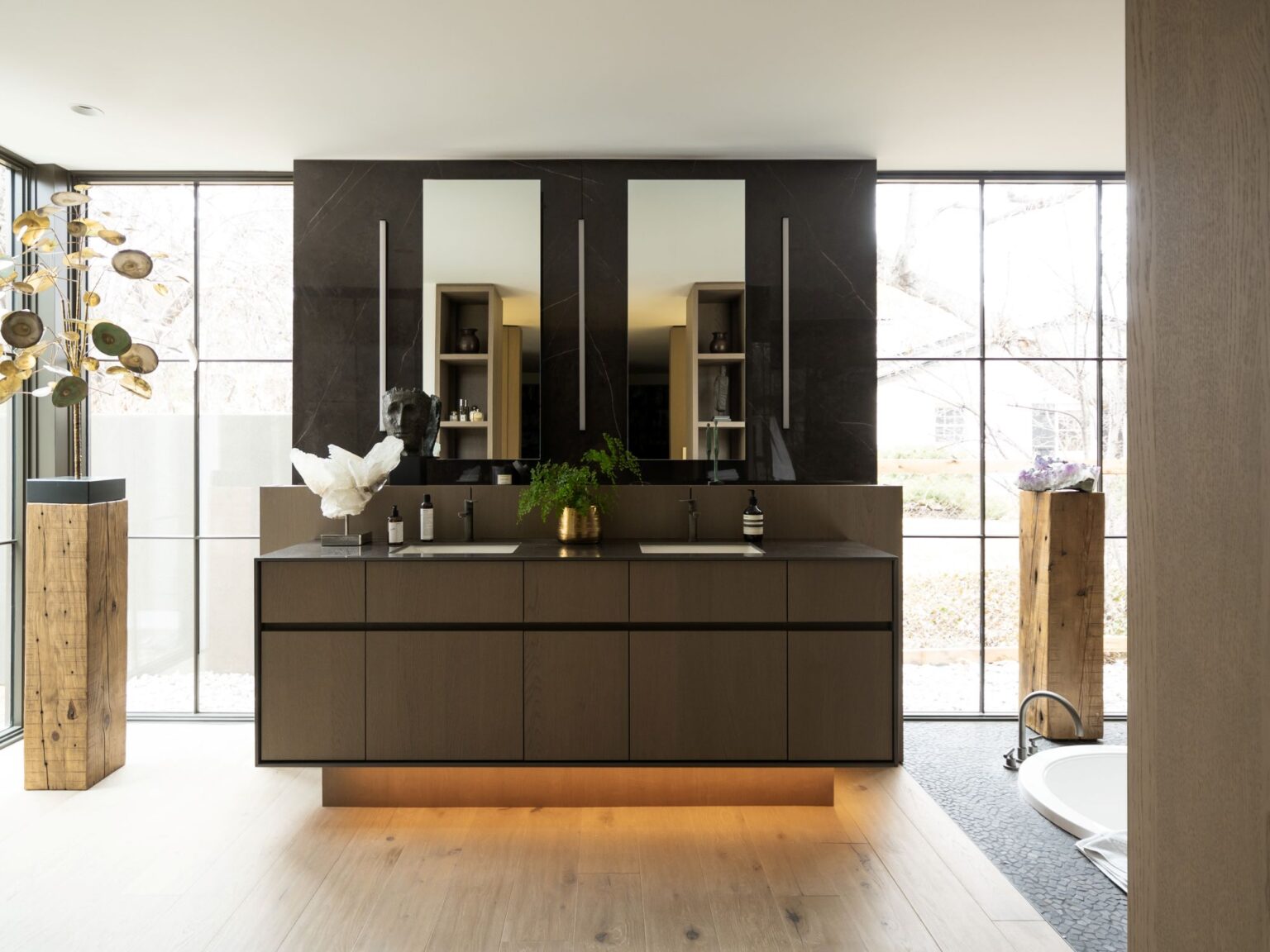
Light in use
Terms you’ll hear
Lighting terms
- Profile and lensThe aluminum channel that holds a strip light, and the cover that softens it into an even line
- DriverThe small power supply that steps household current down to low voltage. Drivers often live in the cabinetry, so we plan an accessible, ventilated spot for them with your electrician
- Low-voltage whipA length of low-voltage wire your electrician leaves at each location marked on our drawings, about two feet or more, so it can be laced into the cabinet
- Low voltage (12V or 24V)The power most cabinet lighting runs on, which allows thin wiring through the casework
- Door contact switchTurns the light on as a door opens and off as it closes
- Sensor switchTurns light on by motion or touch; common in closets and pantries
- CRIHow faithfully light shows color, on a 100-point scale; 90 or higher keeps wood and stone looking true